
Automating SaaS Onboarding with n8n: Playbook, Workflows & Best Practices
Learn how to automate SaaS onboarding using n8n workflows to save time, improve consistency, and scale operations. This guide explores automation playbooks, workflow building, and advanced best practices for Sales Ops, RevOps, and SaaS teams optimizing customer activation.
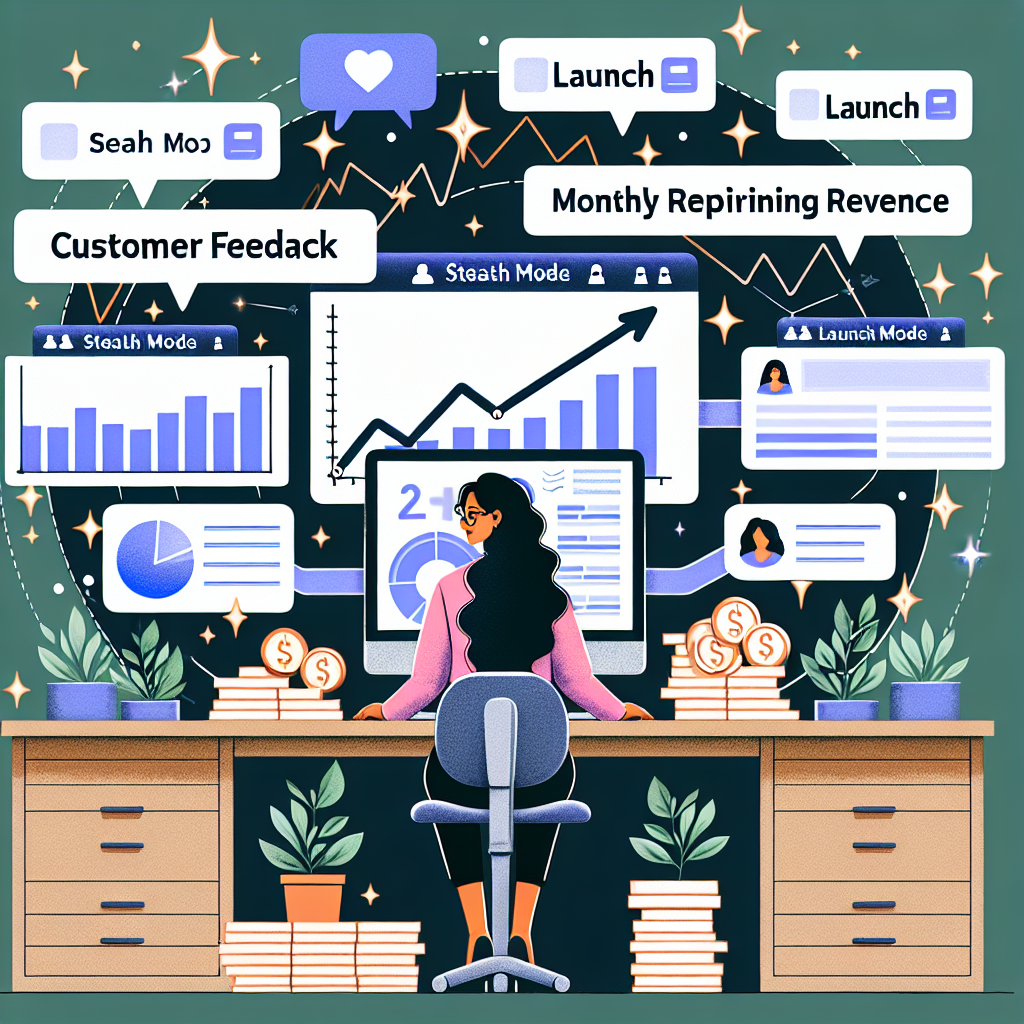
An illustrated dashboard of an automated SaaS onboarding workflow in n8n, showing connected nodes linking CRM, email, and Slack integrations for streamlined customer activation.
Table of Contents
Why Automation Matters in SaaS Onboarding
The Core Elements of an n8n Onboarding Playbook
Building an Automated Onboarding Workflow in n8n
Advanced Tips and Best Practices for Scaling Automation
Measuring Success and Optimizing Continuous Improvement
FAQ
Why Automation Matters in SaaS Onboarding
Manual onboarding drains time from Sales Ops and RevOps teams, often leading to inconsistent experiences and delayed revenue recognition. According to recent SaaS operations benchmarks, teams lose as much as 20% of onboarding time to manual CRM updates and task tracking. Automation through n8n eliminates redundant data entry, synchronizes tools instantly, and streamlines status notifications.
Automated SaaS customer onboarding also enhances consistency across cohorts. Every lead receives timely follow-up, structured activation emails, and aligned playbook steps, minimizing user drop-off after signup. With n8n onboarding workflow automation, teams can standardize communications, manage touchpoints seamlessly, and maintain momentum post-closing. For comprehensive automation strategies that enhance customer experience from the start, explore our guide to automated customer onboarding workflows.
Consider a subscription analytics platform that syncs Stripe data with HubSpot each time a customer activates a plan. The automation posts to Slack when billing is confirmed, reducing manual intervention and errors. In another scenario, a FinTech SaaS refreshes KYC record status automatically using n8n triggers, eliminating delays in compliance checks. These examples show how automation transforms fragmented onboarding into a predictable operational engine.
Automation further reduces handoff friction among marketing, sales, and customer success. Handoff errors drop when tasks are queued automatically in the CRM, and notification nodes in n8n manage sequencing. The outcome is a smoother pipeline, a linear relay rather than a noisy baton pass. This operational consistency ultimately accelerates customer activation and drives faster revenue realization.
The Core Elements of an n8n Onboarding Playbook
An onboarding playbook defines standard operating procedures that guide every new customer from signup through visible value. For SaaS organizations, these playbooks act as internal alignment guides connecting product, ops, and support teams. With n8n, the SaaS onboarding automation playbook becomes interactive: workflows execute each onboarding step automatically instead of relying on PDF guidelines.
A well-built playbook in n8n covers journey stages: account creation, orientation, activation, first value, and expansion. Each stage is tied to automated triggers like welcome emails, CRM enrichment, or in-product messages. Address verification, workspace setup, and Slack introductions are handled through nodes connecting to customer data sources. This builds a practical n8n customer journey automation that adapts to each lifecycle stage.
To ensure stability, teams should maintain a customer onboarding automation checklist that includes field validation, handoff documentation, and alert configuration. This list acts as both a quality gate and a reference for scaling operations. For example, a SaaS HR platform that auto-generates employee provisioning instructions through an n8n Slack flow exhibits immediate onboarding clarity for clients. When planning your lead routing strategy, automated workflows can significantly reduce response times and improve conversion rates. Learn more about lead routing in HubSpot.
Also, not all touchpoints should be automated. Human interactions still matter. High-value customers might require a personalized kickoff via Zoom. Automation handles everything leading to that meeting, including invites, scheduling, and CRM notes, so the meeting itself focuses on outcomes. This balance defines practical n8n onboarding best practices for Sales Ops teams.
Building an Automated Onboarding Workflow in n8n
Creating an automated onboarding workflow begins with mapping your customer journey milestones. In n8n, you define triggers (like a new customer record in HubSpot), actions (send onboarding email via Gmail or Mailforge), and nodes that chain these events logically. Each workflow should begin with clear data entry points: CRM, billing, or signup events.
After mapping triggers, connect stack tools through integrations. For instance, n8n can pull company details from HubSpot, cross-reference them with Slack channels for welcome automation, and post a confirmation to Intercom once initial engagement occurs. Each node visually represents the transition across systems, making debugging straightforward.
A pseudocode representation: trigger → new HubSpot contact → branch 1: send welcome email → branch 2: create Slack channel → branch 3: update CRM lifecycle field. Add guards for missing data and test each flow incrementally. To streamline contact management and data enrichment, consider implementing Apollo as part of your automated pipeline.
Document workflow ownership and dependencies within your n8n dashboard. When processes run autonomously, responsibility can blur. Documentation ensures accountability and traceability. Continuous iteration helps each new customer journey module enhance prior builds rather than fragmenting them.
Advanced Tips and Best Practices for Scaling Automation
Once basic workflows operate reliably, scale them using n8n onboarding best practices for governance and performance. Stability depends on precise versioning; always clone and archive workflows before deploying edits. Implement parameterized nodes with environment variables so credentials and API tokens stay secure when sharing automations across environments.
Develop a monitoring strategy using webhook logs and n8n execution history to identify latency spikes or failed triggers early. As automation volume increases, recurring performance checks prevent bottlenecks from compounding. Where appropriate, consolidate similar flows into reusable sub-workflows to minimize duplication and improve maintainability. Teams adopting n8n in multi-region SaaS companies often benefit from implementing centralized templates to keep onboarding logic consistent across departments.
To ensure resilience, create fallback routes for critical communications, like resending onboarding emails or Slack alerts if an API returns an error. Combine n8n error-handling nodes with conditional logic to retry operations automatically. Maintain transparency by generating weekly automation audit summaries, which highlight frequency metrics and manual overrides. These best practices not only scale productivity but also reinforce oversight as automations expand across larger onboarding ecosystems.
Empower cross-functional collaboration through structured change management. Before introducing new onboarding logic, review dependencies with Sales Ops, Success, and Engineering stakeholders to confirm that workflow outcomes align with business goals. Documenting pipeline ownership within n8n ensures version controls stay transparent and mitigates the risk of unapproved production modifications. Over time, thoughtful governance balances innovation with operational reliability, which is key to scaling onboarding automation safely.
Measuring Success and Optimizing Continuous Improvement
Success in automated SaaS onboarding is measured through a blend of operational, customer, and revenue metrics. Operationally, track workflow uptime, execution speed, and error recovery rates within your n8n dashboard. Customer-facing signals include first-value time, activation completion rates, and engagement metrics across onboarding emails or integrations. Revenue metrics may focus on time-to-revenue or churn during early lifecycle stages. Consolidating these indicators offers a holistic view of how well automation impacts onboarding performance.
Benchmarking is equally important. Compare automated onboarding metrics against pre-automation baselines to identify direct efficiency gains. For example, if automated Slack notifications reduce ticket resolution delays by 40%, this indicates measurable business value. Regularly schedule audits of automation outputs and data handoffs across your CRM or billing tools to prevent process drift. n8n visual workflow logs make diagnosing anomalies intuitive, helping teams refine their automations faster.
Continuous improvement should focus on scalability and adaptability. Use data insights to refine triggers, fine-tune message timing, or merge redundant operations into streamlined sub-flows. Encourage feedback loops between RevOps, Sales Ops, and Customer Success teams to surface emerging bottlenecks. As your SaaS business evolves, revisit onboarding logic quarterly to align with updated go-to-market strategies, ensuring automation remains an accelerator rather than a constraint.
Get in Touch
If your team is ready to eliminate manual onboarding friction and accelerate customer activation, get in touch with Equanax. Our specialists partner with RevOps and Sales Ops teams to integrate every tool in your stack, optimize customer journeys, and unlock the full efficiency potential of workflow automation. Let us help you design and implement scalable onboarding strategies that drive measurable results.
FAQ
How long does it take to build an automated onboarding workflow in n8n?
Most teams can create a basic workflow in a few hours, depending on their integration scope. Complex multi-stage automations that include CRM, billing, and communication channels may require one to two weeks of testing and iteration before deployment.
Can n8n handle customer data securely during onboarding?
Yes, n8n provides environment variables and credential storage features that allow secure API token management. Teams should also enforce workspace permissions and encrypt sensitive data in transit for full compliance with internal security standards.
Is automation suitable for all SaaS onboarding touchpoints?
Not entirely. While automation streamlines repetitive actions and data synchronization, human-led touchpoints still build trust and personalize the experience. The most effective approach combines both automated and manual interactions in one cohesive journey.
What metrics define a successful onboarding automation?
Key metrics include activation rate, time-to-first-value, workflow error rate, and user engagement during onboarding communications. These indicators demonstrate how automation supports faster revenue realization and stronger user retention.
Can n8n integrate with non-SaaS tools during onboarding?
Absolutely. n8n supports a wide range of APIs, enabling workflows that connect SaaS and on-premise systems alike. Whether syncing internal HR systems or external compliance tools, the platform offers flexibility to unify diverse onboarding environments.
Seamless SaaS onboarding begins when technology, process, and experience align. Equanax contact us to design and implement scalable automation strategies using n8n, unlocking full operational efficiency and customer activation potential.